Nine nights
Navratri, day by day
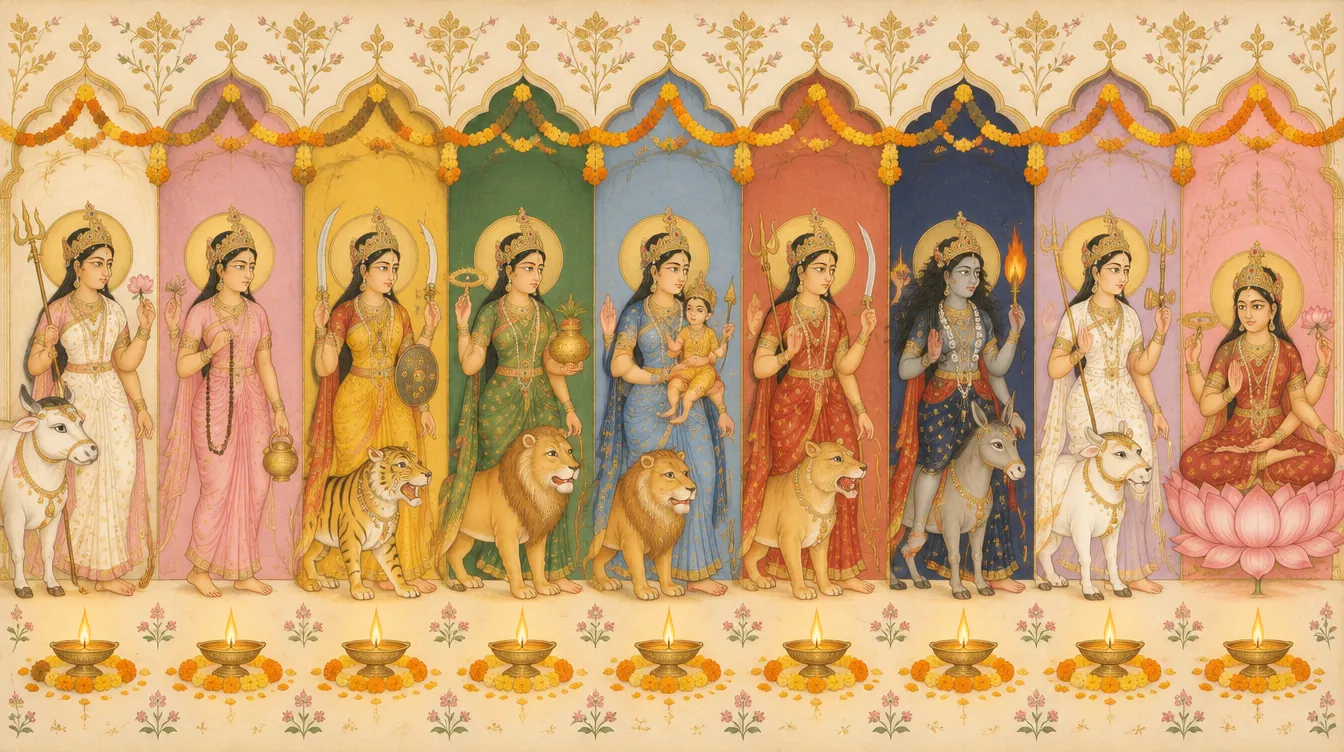
On each of the nine nights a different form of Durga, the Navadurga, is worshipped. Here is each form, her prayer of meditation (dhyana shloka) and what it means.
The nine forms below follow the order given in the Devi Kavacham, which is the order used for the nine days in North Indian and most diaspora practice. Some regional traditions (for example in Bengal, where Durga Puja is central) emphasise other rites and forms during the same period. The descriptions are our own short summaries of widely shared devotional understanding, not statements of history.
Navratri 2027
Chaitra Navratri 2027
India (New Delhi): 7 April 2027 to 15 April 2027 (9 days). Ram Navami 15 April 2027.
Ghatasthapana: 06:05 to 07:26 IST
Melbourne, Australia: 8 April 2027 to 15 April 2027 (8 days). Ram Navami 15 April 2027.
Ghatasthapana: 06:40 to 08:58 AEST
Sharad Navratri 2027
India (New Delhi): 30 September 2027 to 8 October 2027. Vijayadashami 9 October 2027.
Ghatasthapana: 08:05 to 10:12 IST (Abhijit muhurta 11:47 to 12:35)
Melbourne, Australia: 1 October 2027 to 8 October 2027. Vijayadashami 9 October 2027.
Ghatasthapana: 05:57 to 10:04 AEST
Dates follow the Hindu lunar calendar and can differ by a day between places and traditions. Check with your local temple.
The order of the nine Durgas (Devi Kavacham, verses 3 to 5)
प्रथमं शैलपुत्री च द्वितीयं ब्रह्मचारिणी । तृतीयं चन्द्रघण्टेति कूष्माण्डेति चतुर्थकम् ॥ पञ्चमं स्कन्दमातेति षष्ठं कात्यायनीति च । सप्तमं कालरात्रीति महागौरीति चाष्टमम् ॥ नवमं सिद्धिदात्री च नवदुर्गाः प्रकीर्तिताः । उक्तान्येतानि नामानि ब्रह्मणैव महात्मना ॥
prathamaṃ śailaputrī ca dvitīyaṃ brahmacāriṇī | tṛtīyaṃ candraghaṇṭeti kūṣmāṇḍeti caturthakam || pañcamaṃ skandamāteti ṣaṣṭhaṃ kātyāyanīti ca | saptamaṃ kālarātrīti mahāgaurīti cāṣṭamam || navamaṃ siddhidātrī ca navadurgāḥ prakīrtitāḥ | uktānyetāni nāmāni brahmaṇaiva mahātmanā ||
Meaning: First is Shailaputri and second Brahmacharini; third is the one called Chandraghanta and fourth Kushmanda. Fifth is Skandamata and sixth Katyayani; seventh is Kalaratri and eighth Mahagauri. Ninth is Siddhidatri. These are proclaimed as the nine Durgas, and these names were spoken by the great Brahma himself.
Part of the Devi Kavacham, which is recited before the Devi Mahatmya (Durga Saptashati). The same verse is quoted in the Vachaspatyam, a Sanskrit dictionary published between 1873 and 1884, which cites it as from the Brahmavaivarta Purana; so the verse is securely older than 1900.
Shailaputri
शैलपुत्री
The daughter of the mountain king Himavan. She is the Goddess at the very start of the journey, steady and rooted like a mountain, shown riding a bull and holding a trident, with the crescent moon on her head.
वन्दे वाञ्छितलाभाय चन्द्रार्धकृतशेखराम् । वृषारूढां शूलधरां शैलपुत्रीं यशस्विनीम् ॥
vande vāñchitalābhāya candrārdhakṛtaśekharām | vṛṣārūḍhāṃ śūladharāṃ śailaputrīṃ yaśasvinīm ||
Meaning: I bow to Shailaputri, the glorious daughter of the mountain, so that my heart's wishes may be fulfilled. She wears the half moon as her crest, rides upon a bull and holds a trident.
Brahmacharini
ब्रह्मचारिणी
The Goddess as a young ascetic, remembering Parvati's long austerities to win Shiva. She stands for discipline, steady devotion and the strength that comes from self-restraint, holding a rosary and a water pot.
दधाना करपद्माभ्यामक्षमालाकमण्डलू । देवी प्रसीदतु मयि ब्रह्मचारिण्यनुत्तमा ॥
dadhānā karapadmābhyāmakṣamālākamaṇḍalū | devī prasīdatu mayi brahmacāriṇyanuttamā ||
Meaning: May the Goddess Brahmacharini, who has no equal and who carries a prayer rosary and a water pot in her lotus hands, look upon me with favour.
Chandraghanta
चन्द्रघण्टा
Named for the bell shaped half moon on her forehead. She is calm but ready for battle, and stands for courage and protection; the sound of her bell is said to drive away fear and harmful forces.
पिण्डजप्रवरारूढा चण्डकोपास्त्रकैर्युता । प्रसादं तनुते मह्यं चन्द्रघण्टेति विश्रुता ॥
piṇḍajapravarārūḍhā caṇḍakopāstrakairyutā | prasādaṃ tanute mahyaṃ candraghaṇṭeti viśrutā ||
Meaning: Riding the noblest of beasts and armed with weapons of fierce anger, she who is renowned as Chandraghanta extends her grace to me.
Kushmanda
कूष्माण्डा
The Goddess whose gentle smile, in devotional tradition, brought the cosmic egg and so the universe into being. She stands for creative power, warmth and light, and is linked with the sun.
सुरासम्पूर्णकलशं रुधिराप्लुतमेव च । दधाना हस्तपद्माभ्यां कूष्माण्डा शुभदास्तु मे ॥
surāsampūrṇakalaśaṃ rudhirāplutameva ca | dadhānā hastapadmābhyāṃ kūṣmāṇḍā śubhadāstu me ||
Meaning: Holding in her lotus hands one vessel full of sacred drink and another brimming with blood, may Kushmanda bring me what is good.
Skandamata
स्कन्दमाता
The mother of Skanda (Kartikeya), shown with her infant son on her lap. She stands for a mother's love and protection, and for the power that raises a defender of the good.
सिंहासनगता नित्यं पद्माश्रितकरद्वया । शुभदास्तु सदा देवी स्कन्दमाता यशस्विनी ॥
siṃhāsanagatā nityaṃ padmāśritakaradvayā | śubhadāstu sadā devī skandamātā yaśasvinī ||
Meaning: Seated always on a lion throne, with lotuses resting in her two hands, may the glorious Goddess Skandamata always bring what is good.
Katyayani
कात्यायनी
The warrior form who, in tradition, appeared in the hermitage of the sage Katyayana and went on to defeat the buffalo demon Mahishasura. She stands for righteous strength used to end injustice.
चन्द्रहासोज्ज्वलकरा शार्दूलवरवाहना । कात्यायनी शुभं दद्यादेवी दानवघातिनी ॥
candrahāsojjvalakarā śārdūlavaravāhanā | kātyāyanī śubhaṃ dadyādevī dānavaghātinī ||
Meaning: Her hand shining with the gleaming Chandrahasa sword and riding a noble tiger, may Katyayani, the Goddess who destroys demons, grant what is good.
Kalaratri
कालरात्रि
The dark night of time, the most fearsome looking of the nine. She destroys ignorance, fear and evil, and devotees also honour her as kind to those who turn to her, so she is often called Shubhankari, the one who brings good.
एकवेणी जपाकर्णपूरा नग्ना खरास्थिता । लम्बोष्ठी कर्णिकाकर्णी तैलाभ्यक्तशरीरिणी ॥ वामपादोल्लसल्लोहलताकण्टकभूषणा । वर्धन्मूर्धध्वजा कृष्णा कालरात्रिर्भयङ्करी ॥
ekaveṇī japākarṇapūrā nagnā kharāsthitā | lamboṣṭhī karṇikākarṇī tailābhyaktaśarīriṇī || vāmapādollasallohalatākaṇṭakabhūṣaṇā | vardhanmūrdhadhvajā kṛṣṇā kālarātrirbhayaṅkarī ||
Meaning: With a single braid, hibiscus flowers at her ears, unclothed and seated on a donkey, with full lips, large ears and a body anointed with oil; her left foot bright with an ornament of iron thorns, a banner rising above her head, dark in colour: this is Kalaratri, the awe-inspiring one.
Mahagauri
महागौरी
The radiant white form of the Goddess, linked with purity and calm after hard austerity. She stands for cleansing, peace and forgiveness.
श्वेते वृषे समारूढा श्वेताम्बरधरा शुचिः । महागौरी शुभं दद्यान्महादेवप्रमोददा ॥
śvete vṛṣe samārūḍhā śvetāmbaradharā śuciḥ | mahāgaurī śubhaṃ dadyānmahādevapramodadā ||
Meaning: Riding a white bull, dressed in white and pure, may Mahagauri, who brings joy to Mahadeva (Shiva), grant what is good.
Siddhidatri
सिद्धिदात्री
The giver of siddhis, the gifts and accomplishments of spiritual life. She closes the nine nights as the fullness of the Goddess, honoured by gods, sages and all kinds of beings.
सिद्धगन्धर्वयक्षाद्यैरसुरैरमरैरपि । सेव्यमाना सदा भूयात् सिद्धिदा सिद्धिदायिनी ॥
siddhagandharvayakṣādyairasurairamarairapi | sevyamānā sadā bhūyāt siddhidā siddhidāyinī ||
Meaning: Served always by siddhas, gandharvas, yakshas and others, by asuras and by gods alike, may she who grants success, Siddhidatri, be ever present for us.